Europe Beyond Access

Breaking the glass ceiling of performing arts

Across the performing arts and across Europe, disabled artists are pushing the boundaries of form, and are presenting audiences, fellow artists and arts professionals with one of the creative opportunities of our time.

Europe Beyond Access has once again been funded by the Creative Europe programme of the European Union and will run for four years, from 2024 to 2027.

EBA Learning Journeys

For disabled artists, producers and promoters, funders and policymakers.

A series of digital toolkits and educational resources: films, discussions, podcasts, creative tasks, reports and more to support professional development!

Latest news

See more news

The New Report Launched

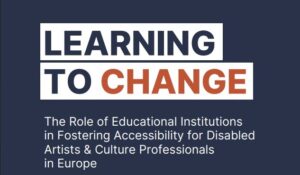
Learning to Change highlights urgent need for Accessible Performing Arts Education

“Learning to Change”: report launch on 3 December

On 3 December, the International Day of Persons with Disabilities, Europe Beyond Access will launch Learning to Change, a new report by On the Move, with the support of British Council

New Report Launching December 3: Save the date! 

How accessible – or inaccessible – is performing arts education in Europe for disabled artists and cultural workers? A new report will change the discussion on it!

Dan Daw: EXXY

Date: December 11, 2025

December 11, 12, 13, 2025 h20, Kampnagel, K2, Hamburg, Germany

 Learning to Change. Report launch

Date: December 3, 2025

Wednesday 3.12.2025, 11 Cet – Online

Annie Hanauer / L’autre maison: Starting with the limbs

Date: November 19, 2025

November 19, 2025 h21, November 20, 2025 h19, Le Triangle, Cité de la danse, Rennes, France

Would you like to stay informed?

We use both the term “artist with disability” and “disabled artist”. We are aware that different countries and languages use different terminology. Even in English-speaking countries, terminology favoured by activists differs. We are also aware that different people define themselves in different ways, and that people self-define as they prefer. When we use the term “disabled” or “with disability” we include those who are Deaf, Neurodivergent and chronically ill. We know that some Deaf people prefer to define themselves as part of a marginalised language group, and not as disabled. Yet we also know that for other Deaf people allyship with others experiencing barriers within society (including in the cultural sector) is an important part of their identity. At its heart, Europe Beyond Access focuses attention on the artistic innovation that so often accompanies artists who have not been part of the mainstream cultural sector.